
During the World Cup, after Norway advanced to the quarterfinals, a basic autographed trading card of Erling Haaland sold for $266 on eBay. Four days later, after Norway's defeat to England and elimination, the same card quickly dropped to $203.50.
Conversely, despite Argentina's defeat in the final, a Messi trading card saw its price soar to 2266 yuan on a secondhand platform. The day before the final, the same Messi trading card only sold for 575.3 yuan. Before the World Cup, the card was even priced at only 218 yuan.
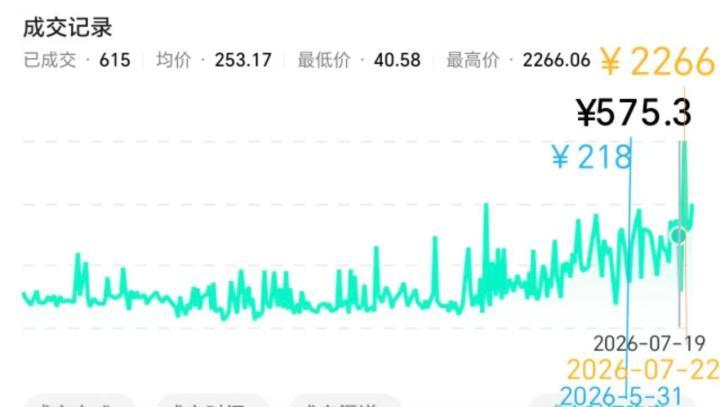
Why do market reactions differ so drastically even when both teams lose?
How does a card gain market recognition for its value?
There are many types of player cards, and there are price differences between different types of cards.
Ultimately, the trading card market is all about "scarcity drives up value".
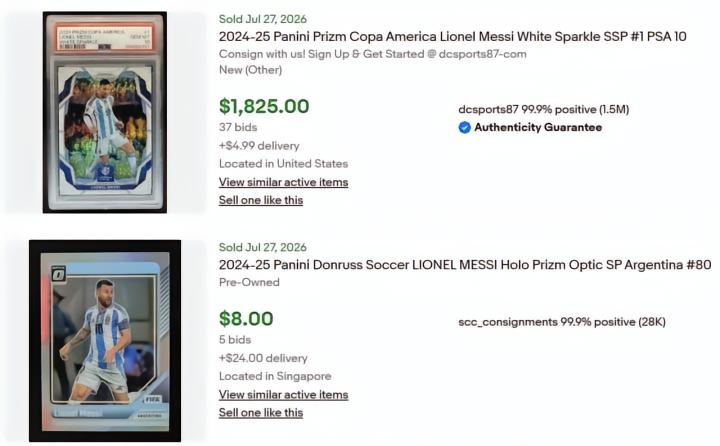
Even among Messi trading cards, different types can have vastly different prices.
Compared to other card types such as commemorative cards and second-year cards (cards issued in the second year of a player's professional career), rookie cards are relatively rare, and their prices are naturally higher. For example, the Yamal Rookie Gold Card issued in 2023-24 sold for 41,250 yuan. The second-year card, also a Yamal Gold Card, sold for only 4,554 yuan.
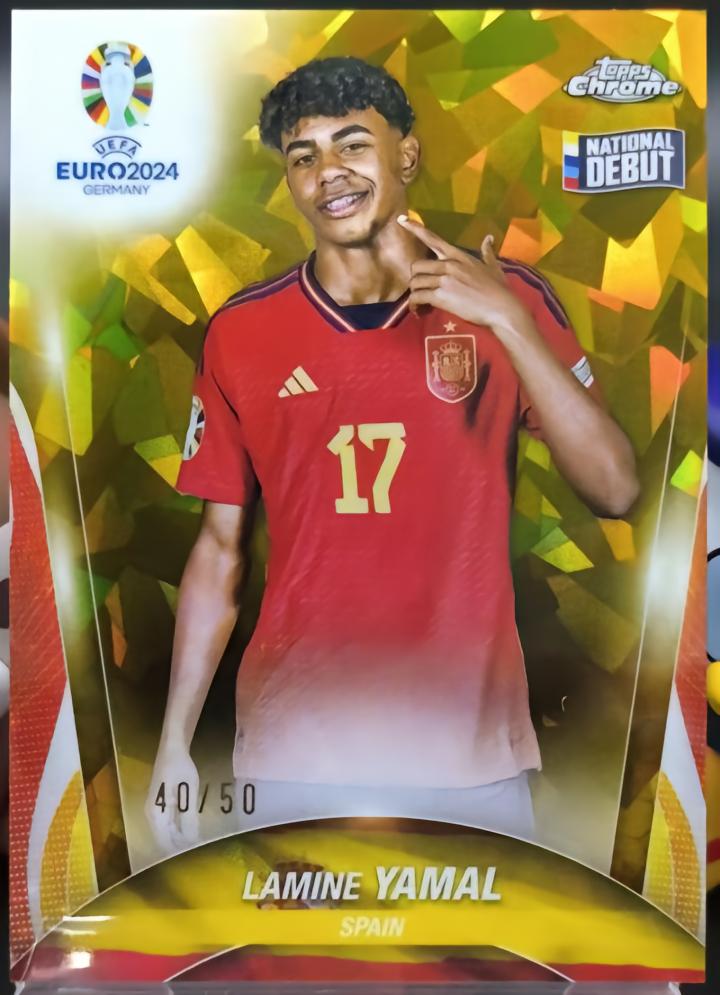
Most player cards are basic special cards, which typically have limited potential for price appreciation.
In addition to basic special cards, card manufacturers release limited-edition parallel versions. These use the same card design but distinguish their release quantities by adding special logos and different serial numbers. Taking some Panini series cards as an example, limited-edition parallel cards are usually divided into black fold, gold fold, and pink fold types based on the reflective effect of the card face. Among them, the black fold is a 1/1 release (only one was issued worldwide) – only top-tier stars are printed on the black fold. Within the same series, the smaller the serial number, the more valuable it is. For example, the Luka Doncic rookie card with serial number 13 sold for $950 on eBay, while the same card with serial number 29 is only worth $600.
In addition, player cards with special numbers, such as matching jersey numbers or special year numbers like the World Cup year, often command higher premiums.
Adding a player's autograph or a piece of their actual jersey to the card would make it even more valuable.
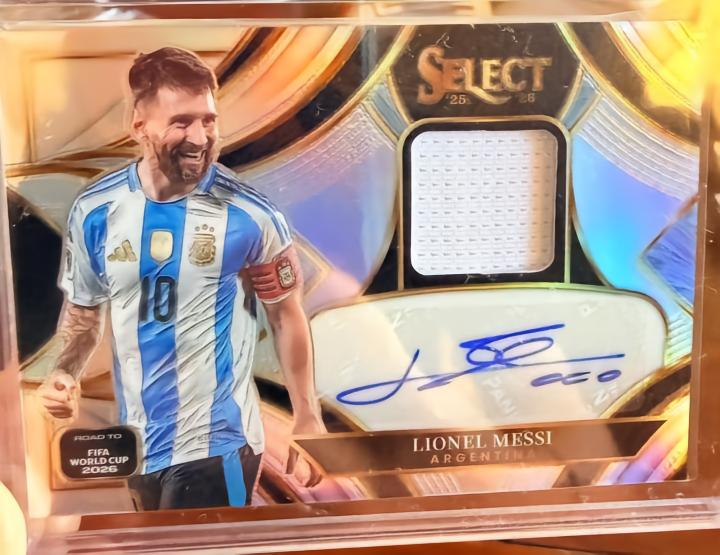
The image above shows a Messi autographed jersey card. This card contains both Messi's signature and a physical jersey.
The same performance can elicit different market reactions from different players. Whether it's a rising star or a superstar already at their peak, a loss in a major competition can affect market sentiment and cause price fluctuations in the short term.
In contrast, if legendary veterans like Messi and Ronaldo can leave behind classic performances on important stages at the end of their careers, even if they ultimately lose, the collectibles market is willing to pay for narratives like "the last dance" or "a legendary farewell," and there may even be cases where the price of trading cards increases rather than decreases.
In addition, the condition of the card is also an important factor in the pricing of sports cards. Card condition evaluation generally involves four steps: checking the corners, edges, face, and center. If a card has sharp corners, smooth edges, no scratches or other defects, and the image is centered, then the card's condition can be considered perfect.
In February 2025, the card grading agency PSA adjusted its standard for centering the front image of cards in the PSA10 grading, tightening the allowable margin difference from 10% to 5%. This made the PSA10 grading standard more stringent, resulting in fewer cards on the market that could be rated PSA10, further increasing the premium of PSA10 cards.
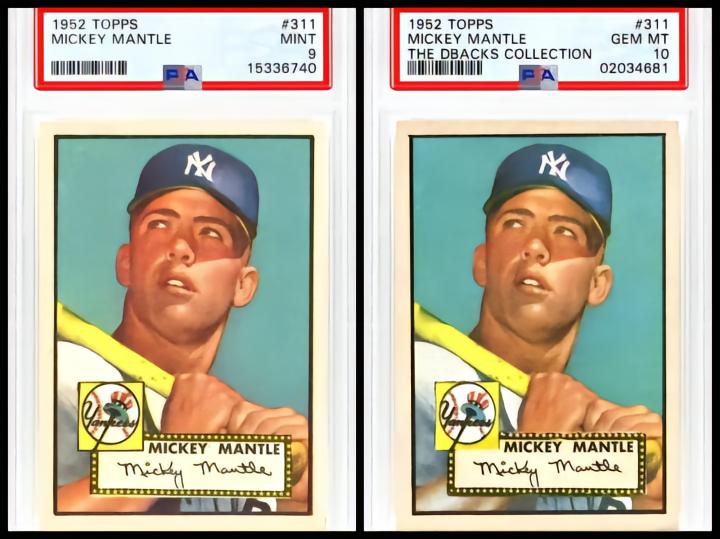
The left image shows a PSA rating of 9, while the right image shows a PSA rating of 10. Can you even tell the difference?
Regarding the condition of trading cards, opinions are often conflicting. To facilitate the circulation of trading cards in the secondary market, collectors urgently need an authoritative institution to grade them using standardized criteria.
Who has the authority to rate player cards?
Card manufacturers include official certification with each card release. If the card features a signature or material (such as part of a jersey), the manufacturer will also include a signature or jersey material certification.
Alternatively, collectors can mail their cards to third-party grading agencies (such as PSA/BGS) for grading.
PSA is headquartered in Southern California, USA, with offices in New Jersey, Paris, Hong Kong, Shanghai, and Tokyo.
However, having a PSA office does not necessarily mean having complete independent rating capabilities. Currently, the PSA Shanghai office is mainly responsible for Asian market promotion and customer service, and is not a primary rating facility. Core rating, packaging, and certification processes still need to be completed at the US headquarters.
Generally, collectors in China need to pack the cards according to the packaging requirements and then contact a third party to send them to the US headquarters for grading.
Rating agencies assess the authenticity, condition, and special attributes of cards. Because grading is costly and involves breaking the seal, there is a risk of damaging the card or causing a downgrade. Generally, a card should only be sent to one third-party rating agency.
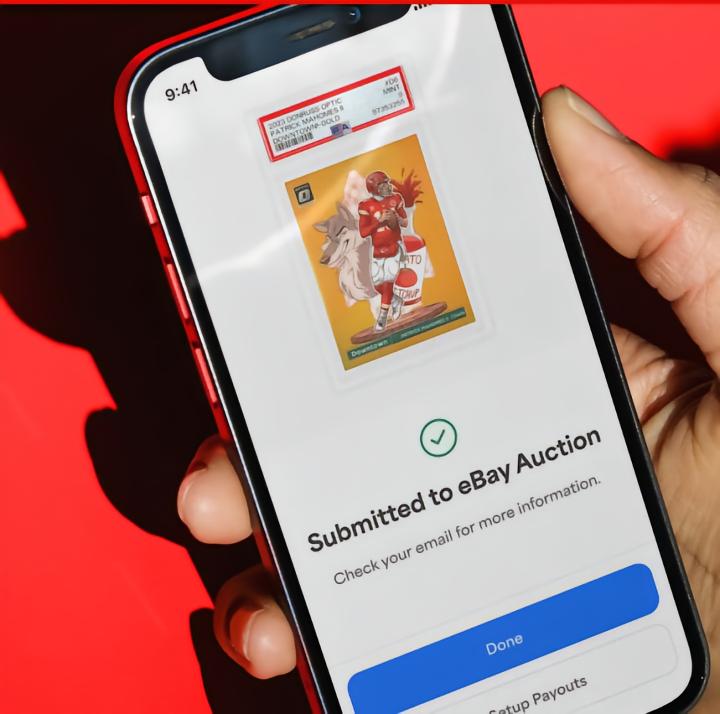
Typically, mid-to-high-end cards costing several hundred to several thousand US dollars are easily resold due to their high market acceptance and circulation, making them worthwhile to have rated by a third-party institution.
As for the limited-edition black fold card, there's only one in the world, and the fact that it's from a top-tier player already proves its extremely high value. High-end buyers prioritize authenticity and provenance over card condition; sending it for grading risks damaging the card, so very few people send it for grading. Furthermore, due to its exorbitant price, such cards are often unavailable, typically only for top-tier collectors, and rarely resold. If you own a Messi black fold card, even without a PSA10 grade, buyers will still recognize it as a high-value card when trading it on the market. As for when you'll find a buyer willing to pay a high price, that's something that will likely have to wait for the right opportunity.
As for those ordinary special cards that can only be sold for three yuan, no one would be foolish enough to send them for appraisal.
How high can trading cards for sports stars go on the market?
Based on publicly available transaction prices, the most expensive sports card in the world is the 1952 Topps #311 rookie card of American baseball legend Mitch Manto. This card was sold for $12.6 million (approximately 900 million RMB) in 2022, setting a record in the sports card collecting market.
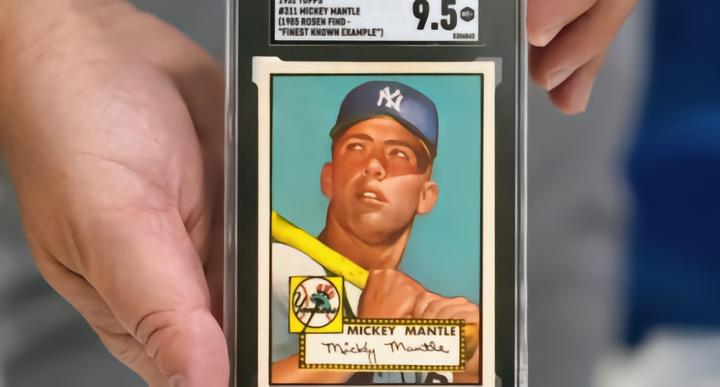
Its high price is not only due to Manto's legendary status in baseball history—7 World Series champions, 20 All-Star selections, and 3 American League MVPs—but also because this card is extremely rare due to the fact that many cards were damaged during long-term storage due to its age.
More importantly, the value of top-tier player cards is no longer determined solely by the player's current performance, but is driven by their historical status, rarity, and the consensus formed in the collector's market.
In the realm of football, the most expensive football card ever sold is Messi's Panini Mega Cracks series rookie card. This PSA 10 card was sold privately in 2025 for $1.5 million, setting a new record for the highest price in the football card collecting market.
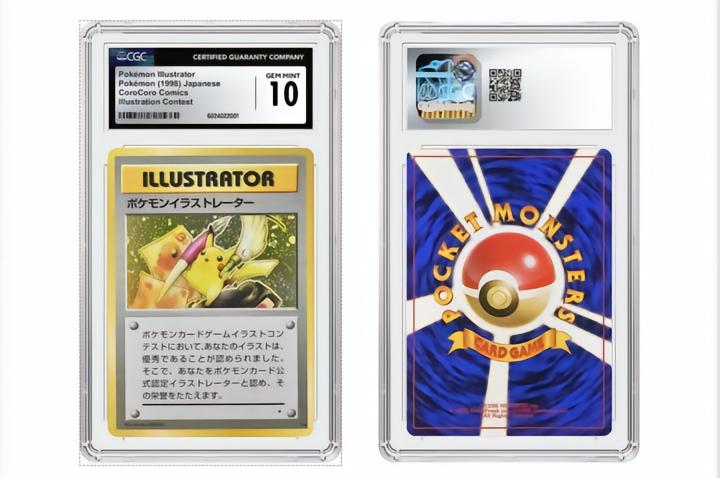
Pokémon cards are also experiencing a frenzy. A promotional card for the 1998 Japanese CoroCoro Manga Illustration Contest, drawn by a Pokémon illustrator, sold for a staggering $2.09 million in February of this year. This card, originally intended as a prize in an illustration contest, has become a top-tier collectible in the market more than two decades later, demonstrating the almost pathological pursuit of "rarity" in the collecting world.
Besides the cards themselves, who is driving the premium?
Card reveal bloggers generate buzz by live-streaming card revealing sessions, exchanging ideas with fellow card enthusiasts, and showcasing rare cards. This not only attracts many newcomers to the hobby but also increases public interest in rare cards featuring deceased players and veterans, further driving up their prices. In addition, public figures, due to their inherent social influence, exert an even greater impact.
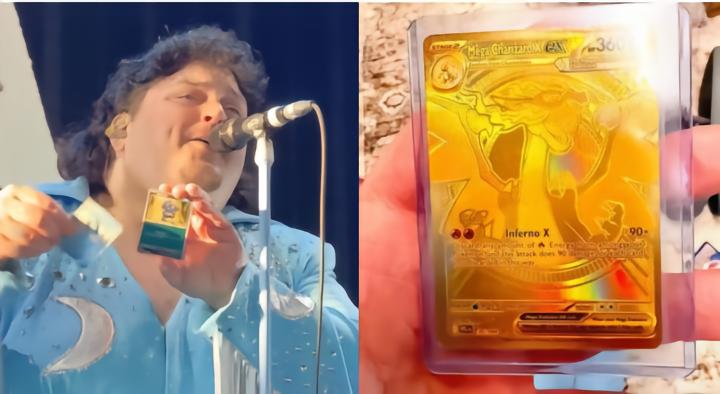
A video of Canadian singer Talk opening a rare card during a performance went viral online, attracting many netizens to follow suit and sparking a card-opening craze at concerts and music festivals.

There's also Emma Roberts, the popular actress who starred in "Scream Queen." She not only enjoys gacha herself, but also frequently streams her gacha runs on social media.
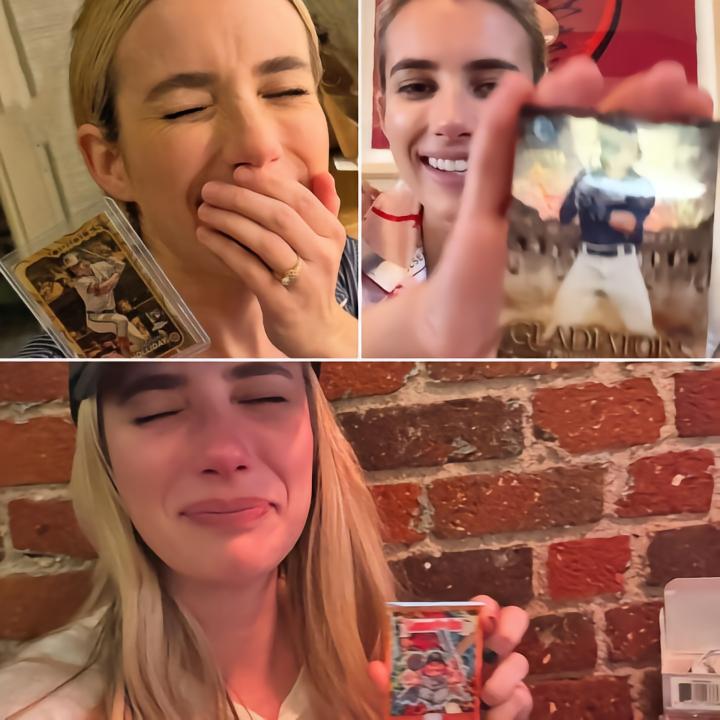
Emma Roberts also starred in a parody ad for The Sopranos to promote the Bowman Chrome baseball card, which will be released in 2025.
The price of a single trading card depends not only on the player's skill and the card's scarcity, but also on a combination of factors including market sentiment and capital flows. The trading card market is essentially a value game between collectors, investors, and platforms.